TargetRun - AI-Powered Trip Prediction for Delivering Timely Offers
Business Context
Target Circle Bonus offers are often multi-trip: a guest earns a reward by making a number of qualifying trips within a window. To structure these offers well, we need to know how many trips each guest is likely to make in the coming weeks. An offer that asks for too many trips goes unredeemed, and one that asks for too few leaves engagement on the table.
Traditional forecasting models treat shopping interactions as disconnected events, but shopping is inherently sequential: seasonal surges, post-promotion cooldowns, steady repeat visits, and impulse buys all follow from what came before.
Our Goal
Forecast each guest’s trip count over the next 2–3 weeks so that CORE can recommend offers that fit naturally into the guest’s expected shopping rhythm.
Model Architecture
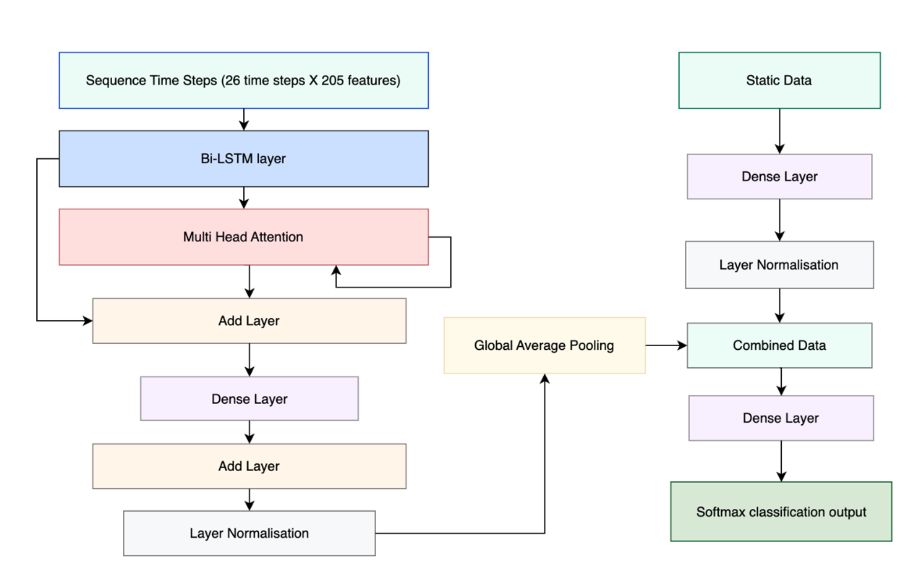
- Sequential inputs: 52 weeks of guest history (spend habits, digital activity), grouped into ordered steps, for example a 26-step biweekly sequence for a two-week forecast.
- Bi-directional LSTM: Captures both earlier and later context in a guest’s history.
- Multi-head attention: Highlights the weeks most relevant to the upcoming trip window.
- Static branch: Summarizes long-term guest features (engagement, membership) into a profile.
- Fusion & output: The sequential and static representations are merged. The final layer outputs a probability distribution over trip counts for the forecast window.
Handling Imbalanced Data
High-engagement shoppers are a minority in the raw data but matter most for multi-trip offers. Two techniques addressed this:
- Importance weighting rebalances the training data toward high-engagement guests.
- Focal loss down-weights easy examples and focuses learning on hard misses, such as guests making several trips in a short period.
A/B Testing - Results
We ran a live A/B test across High, Medium, and Low engagement guests over a three-week horizon matching campaign cycles. 20% of guests got trip forecasts from TargetRun and 80% from the baseline Trip Count Predictor (a fully connected network). Both arms used CORE, so only the trip-count input differed.
- MAPE reduced by 50%
- 15% more accurate than the baseline, with 40%+ higher predictive power
- 44% less over-prediction
- 78% redemption lift among rare redeemers
- Opt-in, completion, and redemption improved across all engagement segments
Impact & Recognition
- Integration: Powers the trip-count input to CORE, Target’s contextual offer recommendation engine.
- Publication: Featured on Target Tech Blog (2026)
- Next steps: Extending TargetRun to predict the channel (app, Target.com, or store) where a trip is most likely to happen.
This project applies sequence models to make personalized offers fit each guest's shopping rhythm. Read the full blog post for more details!